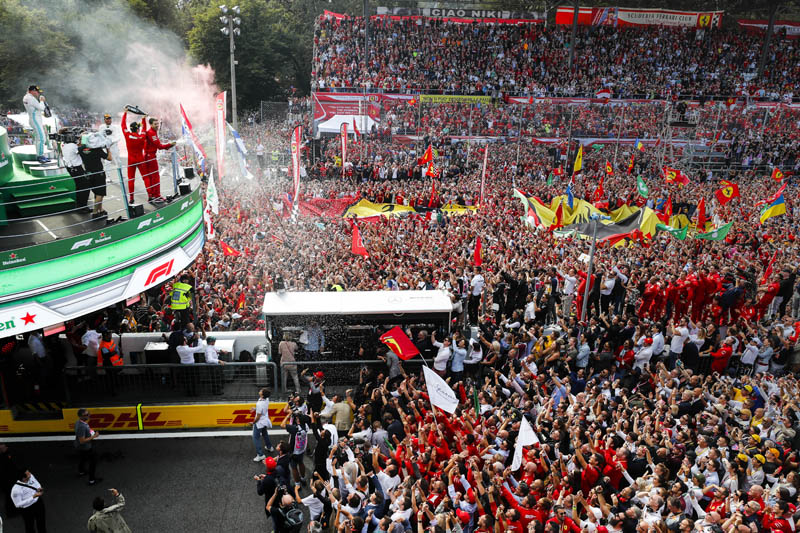
 World motorsport is a constantly changing arena. It is driven by new technology, to push performance, speed and safety.
The global coronavirus pandemic has thrown a massive spanner in the works for all levels of motor racing, from grassroots to the upper echelons of Formula One. The season needs to be completely reorganized, with a vastly changed calendar, the possibility of races being conducted behind closed doors, and great uncertainty about the future. But while the pandemic has disrupted events considerably, and has dominated headlines across the world of sport, those with motorsport insider knowledge know full well that there are myriad other challenges to be faced in the coming years. In fact, many of these challenges are ongoing and fiercely divisive among officials, teams, drivers and fans. Let's take a closer look at some of the issues facing the sport, with a focus on the top tier of motor racing, Formula One.
Spending cap
F1 is the most expensive sport to compete in. Getting to the paddock for every race weekend costs eye-watering amounts of money on transport and logistics alone. Not to mention the cutting edge technology that every team needs to produce and maintain one of the fastest cars in the world. And of course, don't forget the astronomical salaries commanded by the elite drivers. Unsurprisingly, there are many within the sport who favor a spending cap, limiting all the teams to the same budget. This encourages new and smaller teams, whether they are run by car companies or as privateers. The big teams, such as Ferrari, Red Bull and Mercedes have almost inexhaustible funds to pour into the development of their cars and the enormous fuel loads they need to run smoothly. This has led to a huge gulf in performance between the top teams and the midfield and backmarkers, meaning the results on track become predictable, and disheartening for the others. There is resistance at the front of the grid to a spending cap, but even ex-Ferrari stalwart Jean Todt, now boss of the FIA, feels that change is in the air.
 Environmental Concerns
Technically, Formula One cars have been hybrid since the introduction of the KERS (kinetic energy return system) in 2009. But the 2014 season saw a great leap forward as the grid adopted V6 Hybrid engines, more environmentally friendly, and less thirsty for fuel than those which had come before. Over in the USA, NASCAR has been considering rolling out hybrid engines with a penciled in launch scheduled for 2022. However, they are discussing whether hybrids would be better suited to shorter, more technical circuits such as Watkins Glen, rather than the huge oval speedways. Those interested in keeping up with these developments can read more news about NASCAR here. Another area that motorsport needs to respond to is the carbon footprint it generates. The Formula One calendar travels across Europe, the Middle East, East Asia, and the Americas, and the caravan contains hundreds of vehicles to set up and run the races. How to tackle this challenge is, as yet, unclear.
Safety
Motor racing is dangerous. It says so on every ticket for every race, and it should be remembered that, although safety is greatly advanced, the worst can still happen. Cast your mind back to the 2015 Japanese Grand Prix in which promising young driver Jules Bianchi lost his life after colliding with a recovery tractor in torrential rain - the latest in a long list of fatalities in F1, a grim read indeed. F1 is a sport that learns from tragedy though and seeks to rectify its mistakes immediately. Innovative technology needs to be constantly developed to make the sport as safe as it can be. The protective halo that became standard on all cars in 2018 was crucial to Charles Leclerc's survival, when he was involved in a first corner incident with Fernando Alonso, at Spa-Francorchamps that very year. Safety for drivers, teams, marshalls, and spectators continues to be the primary concern for motorsport - this is one challenge that is never going to go away.
 Entertainment Factor
Liberty Media, who bought the F1 franchise in a deal finalized before the 2017 season began, are constantly aiming to increase the excitement of the sport, and bring in new audiences from around the world. The introduction of KERS, DRS (drag reduction system), virtual safety cars and many other rule changes aim to increase overtaking opportunities, and minimize disruption to the races. Whilst this does make for more on-track action in terms of passing moves, long time race fans miss the nail-biting tension of a long, drawn-out pursuit, with two evenly matched cars dueling for lap after lap, without any radical speed increases (both KERS and DRS favor the trailing car). There is also a constant debate about whether or not refueling during the race should be brought back - it adds an old school variable and another element in pit stop drama.
Motorsport differs from most other sports, in that it needs to redefine itself and its rules and regulations every few years. There will always be challenges to face to make sure that the fans get what they want, come race day.