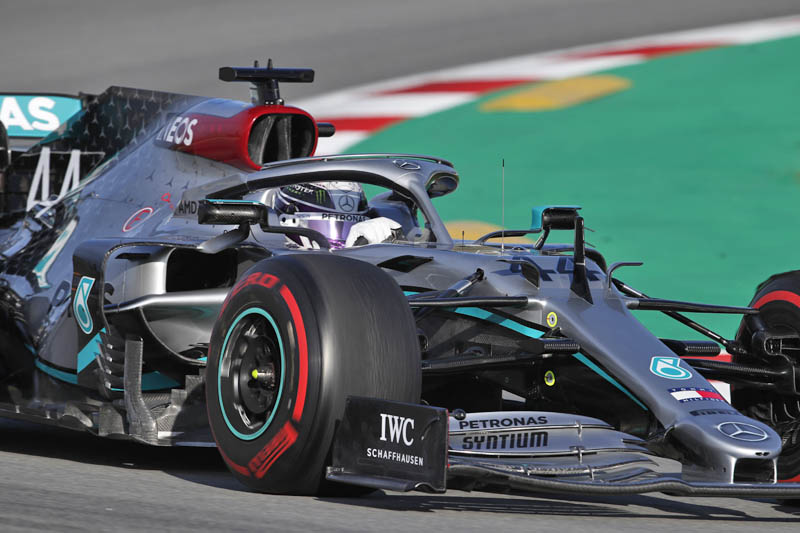
Ever watch a Grand Prix and wonder how everything from the teams, cars and drivers get from an event to another? Well, the logistics behind the tracks are pretty much similar to a military operation.
Long before the chequered flag has fallen, the pack up operations are already on their way to relocate F1. However, behind the scenes, we uncover a herculean amount of logistics of transporting the essential equipment, which generally requires extreme fidelity and precision.
To set things up properly, logistic teams use a blend of three modes of transportation, such as roadways, airways, and waterways to transport their equipment, staff, and cars. Although it is a worldwide sport, the majority of Formula 1 teams are based in the Europe-Haas f1 is currently headquartered in the U.s but also has a base in the U.K. Each of these teams travel miles during a season bringing cars, heavy equipment, dismantling and packing up garages.
 International flyway
For international or "flyway" types of races, the logistic challenge is a trickier one. To mitigate the difficulty of the operation, teams are grouping parts that require transportation into two types, namely critical and non-critical. The critical parts usually include tires, chassis, wings, IT racks and computers. When it comes to non-critical parts, they normally refer to tools, jacks and other components found in the garage.
The non-critical parts are normally scheduled in 5 sets to be shipped between two global race locations. For instance, while one set is going straight on to Canada, the Singapore Grand Prix goes straight on to Brazil. Before they can be transported, the cars are stripped off their last components.
They remove the engine and gearbox, together with the front and rear wings and mirrors and suspensions too. Each of these components are diligently packed in their own foam slotted box. However, some F1 logistics enjoy going the extra mile just to bubble wrap each of these components with a maxim of precaution.
The logistics behind Formula 1 is not an easy nor a cheap job. The majority of the teams choose their own custom-built cargo crates uniquely designed to fit in the cargo while others currently rely on cargo planes, registered by FOM in partnership with DHL.
For International roadways
As the popularity of this sport increases dramatically, the logistic endeavours required to transport both teams and their equipment also must develop proportionally. When fans turn off TVs and start watching the most famous race in the world, they cannot possibly consider that such an event is, in fact, a herculean logical process.
As for road transportation, F1 cars are boxed up and safely delivered with all their aero packing removed. They are placed on high platforms inside the truck and shielded to overcome any sort of movement or damage during transportation. Peterbilt Trucks Canada, a commercial truck supplier with 80 years' experience on the market, said that all vital equipment -cars, spare parts, and tools are carefully loaded into the trucks. The rest of the equipment, such as tires and fuel and other equipment, are transported individually by technical contractors and local partners.
The use of clamshell bucket trucks has become increasingly popular for handling heavy-duty tasks in logistics, providing a reliable solution for loading and unloading equipment. These trucks are specially designed to enhance efficiency and safety during the transportation process.
Sleeping in a bus, driving in a truck
These sorts of events are utterly overwhelming. For example, when the huge Grand Prix takes place in Europe, every two weeks, the Formula One Group and the International Automobile Federation has to employ over 450 road trains to ensure equipment transportation for the teams. One of the F1 Team managers explains that when the route is longer, they must hire three drivers on a sole truck. Additionally, he mentioned that for this reason, not only that, they hire a large number of vehicles, but they also hire a bus in which exhausted drivers can sleep.
Logistic talent is much needed
No matter the means of transportation, it is vital to plan out all the finest detail and take every potential obstacle into account. For example, you would have to take into consideration accidents or strikes on the roads or airports. Not even a simple logistician with years of experience behind is not able or prepared enough to tackle all that. When it comes to this sort of transportation, the skill might not be enough. Apart from that you have to bear in mind the relocation of huge staff starting from mechanics, cooks, journalists, and other essential personnel without which a race cannot be possible.
Overseas Travel
This kind of transportation logistics is a lot more complex for a Grand Prix held outside Europe. The way it's shipped might depend on a few crucial factors, including the amount of time presented and the distance between the locations. In order to cut down costs, some teams choose overseas transportation. For instance, they start shipping five lots of cargo from the first five fly-away races of the season in January. Usually, the whole cargo is sent to spin around the world. When the Australian Grand Prix has completed the route, the sea transportation will soon be sent to a sixth fly-away race of the year in Singapore and then deposited there until the next race in September.
Much like how race teams prepare for overseas logistics, some vehicle owners also seek extra protection from weather and road debris when transporting high-value cars across long distances, ensuring their assets arrive safely and on time.
The logistics behind the F1 races can be truly impressive as it takes a myriad of factors into consideration. From steady data, decisions are made. A new component may be fabricated in a certain continent then immediately shipped to the next location to meet the mechanics as they prepare for the new race. Time is also a critical factor as the parts must arrive on the same day so that everyone from mechanics to drivers can begin preparations.
Indeed, the most advanced form of racing requires some of the most advanced levels of logistics planning we'll find in any sports. It's worth knowing that without top-notch logistics and talented teams, one of the most spectacular sports in the world would never be the same. The process of relocating people and valuable components across the world and ensuring that everything lands where it needs to land can be both exciting and challenging.