 Cyril Abiteboul, Renault Sport Racing Managing Director: In the wake of challenging back-to-back races for the team, the Brazilian Grand Prix is already looming. Interlagos is a legendary circuit that often makes for an unpredictable race in front of many excited fans. The weather often plays an important role, but come rain or shine, we are confident in the positive qualities of both our drivers and the R.S.17. The enthusiasm of the fans is always enjoyable to see and hear; in so many regards it is a very fine Grand Prix.
For its part, the Mexican Grand Prix was particularly difficult with a number of unacceptable mechanical problems and we have the clear intention to take fast and strong measures. The particularities of Mexico accentuated our weaknesses, but clearly we have not been successful in balancing performance and reliability.
The performance of our engine has progressed a lot this year as the results in the race attest; we now have to find reliability, for both us and our customers, even if Max won magnificently in Mexico.
The team remains confident and united, which is essential to maintain progress to the end of the season, and also for our preparations for 2018. We have the means; our organisation is stable, robust and competent.
This season we set ourselves the goal of fifth in the Constructors' Championship. Whilst achieving this is still mathematically possible, it is now a tall order after a race where we didn't score points.+
Mexico highlighted our performance potential. Both cars sadly retired, however the two cars reached Q3 and lined up seventh and eighth on the grid and were in fourth and fifth at the end of the first lap. Points were clearly within our reach.
There are now two Grands Prix remaining. We will do everything we can to be sixth at the end of the weekend.
Finally, as in Mexico, we will display our concept of the Future of F1 with the R.S.2027 Vision, which was revealed earlier this year at the Shanghai Motor Show. It will be presented to the Brazilian media with, I am sure, the same success.
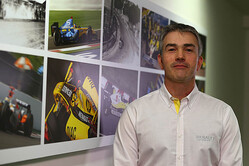
After a Mexican Grand Prix which fell short of expectations, the team have a point to prove at Interlagos, one of Formula 1's most popular circuits, explains Technical Director Nick Chester.
What are the main challenges of Interlagos?
Nick Chester: It's a track with three interesting and contrasting sectors. The first sector is fairly quick with medium to high speed corners and a short straight which enables DRS overtaking opportunities. The middle sector is very twisty, which should play to the strengths of the R.S.17 pretty well. The lap is capped-off with a big drag up the hill and the long straight. It's an interesting layout sat at a relatively high altitude. Both drivers should perform well there in the R.S.17.
Interlagos was once the highest on the calendar, is it still a challenge after the giddy heights of Mexico?
NC: Despite the reasonably high altitude of Sao Paulo, Mexico City trounces it. Instead of being 25% down on air density as we are in Mexico, we'll be down only by around 10% which is much, much easier to manage. We're not expecting too many dramas to control temperatures and there will be a range of set-ups for us to try out. It's not a full downforce track like Monaco or Hungary but there are a range of aero set-ups for us to try.
Dare we mention the weather?
NC: The weather can be quite exciting there and is always a bit of an uncertainty. Notably, there have been four wet races in the past nine years at Interlagos. We haven't had many wet races this year, so certainly there's some scope for interest. We'll be well prepared for any eventuality.
What are your thoughts on Carlos's first two races with the team?
NC: Carlos has been very good. He had a fantastic race in Austin, he works with the team brilliantly, qualifies well and I think he's done a great job so far. Mexico was tricky with low grip, particularly in the wake of other cars, which led to the spin in the race.
How's progress with next year's car?
NC: We're making strong progress at Enstone and it's where our focus lies. It's a completely new car despite a relatively low number of regulation changes. We've learnt a lot on the aerodynamic package and the balance of a car built to 2017 regulations, so the car should represent a strong step forward. We'll be doing some aero runs in practice in Brazil with a variety of aero instrumentation to help prepare the 2018 package.



sign in