Site logo

How Technology Exchange has Developed Road and Race Vehicles Alike

NEWS STORY
22/01/2021

Among the many side benefits of elite motorsport is that many of the innovations which succeed in making Lewis Hamilton go around Monza faster also have considerable utility in non-racing settings.

The list of features that have made the journey from the racing car to the road car is long - and a few of them have also made the journey in the opposite direction.

Let's take a closer look at this exchange and what drives it.

Finance

Financial investment in research and development for motorsport is significant, particularly in Formula 1. In this environment, coupled with the high-pressure competition where fine margins can make an enormous difference, technological advancement occurs at a greater pace than in the rest of the automotive industry. These advancements commonly transfer to car manufacturing to improve efficiency and performance.

Manufacturers with Motorsport Divisions

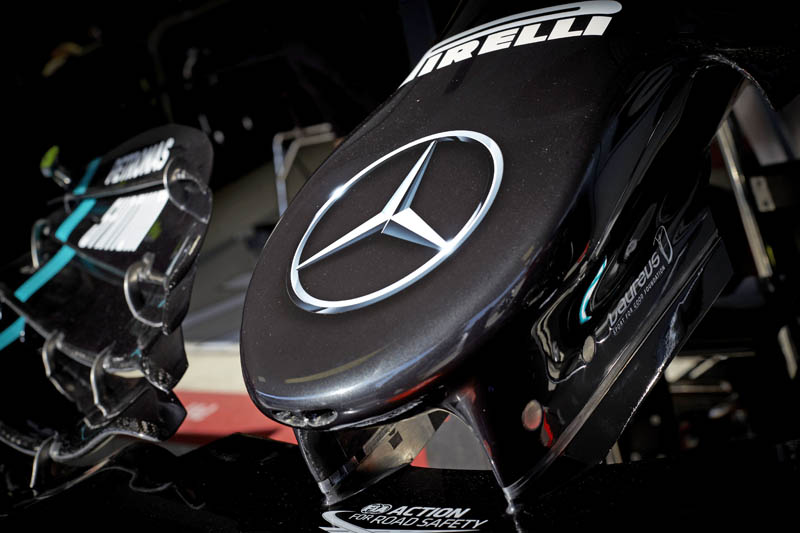
Transferring engineering secrets from the track to the road isn't always straightforward. Manufacturers like Ferrari and Mercedes-Benz have a footing in Formula 1 - this way, innovations made in one market can influence operations in the other. For example, a development to the Mercedes F1 car may well find itself introduced or influencing an upgrade to the C-Class down the line.

What innovations have been exchanged?

Let's take a look at a few examples of this process.

Turbocharging

A turbocharger is designed to force compressed air into the engine. It's driven by the exhaust, and provides extra power when it's activated. Surprisingly, given its usefulness in performance, this innovation didn't actually start in the world of racing but in road cars in the 20th Century - though it did make its way there in the 70s, courtesy of Porsche, and then later Renault.

Aerodynamics

Air resistance was a serious consideration for racing cars long before road cars. Naturally, as road cars were developed for aesthetic and performance purposes, aerodynamics became more significant.

Carbon Fibre

This is an innovation that actually originates in aerospace - it was first used in the McLaren MP4/1, and was rapidly established as a favoured material for racing vehicles thanks to its strength and relative weight. As well as making the cars faster, it also made them safer, as carbon fibre is a stronger material than aluminium and other such materials that were used before.

Disc Brakes

Disc brakes, being open to the air, are able to cool much quicker than drum brakes. The technology earned its stripes on the track, aiding success at the Le Mans 24-hour race. Disc brakes are now standard on new road cars.

LATEST NEWS

more news >

RELATED ARTICLES

LATEST IMAGES

galleries >

  • Pitpass.com latest F1/Formula 1 images
  • Pitpass.com latest F1/Formula 1 images
  • Pitpass.com latest F1/Formula 1 images
  • Pitpass.com latest F1/Formula 1 images
  • Pitpass.com latest F1/Formula 1 images
  • Pitpass.com latest F1/Formula 1 images
  • Pitpass.com latest F1/Formula 1 images
  • Pitpass.com latest F1/Formula 1 images
  • Pitpass.com latest F1/Formula 1 images
  • Pitpass.com latest F1/Formula 1 images
  • Pitpass.com latest F1/Formula 1 images
  • Pitpass.com latest F1/Formula 1 images
  • Pitpass.com latest F1/Formula 1 images
  • Pitpass.com latest F1/Formula 1 images
  • Pitpass.com latest F1/Formula 1 images
  • Pitpass.com latest F1/Formula 1 images
  • Pitpass.com latest F1/Formula 1 images
  • Pitpass.com latest F1/Formula 1 images
  • Pitpass.com latest F1/Formula 1 images
  • Pitpass.com latest F1/Formula 1 images

POST A COMMENT

or Register for a Pitpass ID to have your say

Please note that all posts are reactively moderated and must adhere to the site's posting rules and etiquette.

Post your comment

READERS COMMENTS


No comments posted as yet, would you like to be the first to have your say?

Share this page

X

Copyright © Pitpass 2002 - 2026. All rights reserved.

about us  |  advertise  |  contact  |  privacy & security  |  rss  |  terms