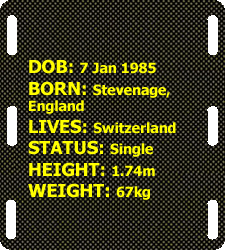
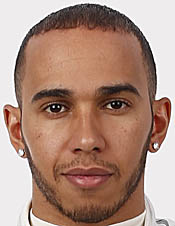
|
It is well documented that at the tender age of 8, little Lewis Hamilton approached McLaren boss Ron Dennis, to advise him of his talents. The Englishman responded by telling the youngster to win some races then come talk to him again.
By the age of 10, Lewis had won his first British Kart Championship, and in the years that followed he added a further four titles to his tally.
Consequently, Dennis stuck to his word, and at the age of 13 Lewis was signed to the prestigious McLaren Driver Development Support programme, the youngest driver ever to be signed up by a Formula One team.
With the backing of the multiple World Champions, Lewis won the European and World Karting Championships, claiming Karting's World No 1 status in 2000 at the tender age of 15, the youngest driver to do so. That same year, Lewis won the Elf Masters at Bercy, in addition to being recognised by the British Racing Drivers' club (BRDC) with "Rising Star" membership.
In 2001 Lewis made the move up to single-seaters, contesting the Formula Renault Winter Series (finishing fifth overall), which led to a full season of Formula Renault in 2002, which saw the youngster finish third.
He remained in Formula Renault in 2003 and was a convincing champion, winning the series with two races remaining, courtesy of 10 wins, 9 fastest laps and 11 pole positions.
For 2004, Lewis, now aged 19, moved to the highly competitive Formula 3 Euroseries, which forms part of the support programme to the legendary DTM series. Driving for Manor Motorsport, in its rookie season in Europe, Lewis finished fifth, following a win at the Norisring and four further podiums. Along the way, he found time to win the Bahrain F3 Superprix and Race 1 at the Macau Grand Prix.
2005 saw Lewis progress further up the ladder, moving closer to his ultimate goal. Racing for ASM, he won the Formula 3 Euroseries, courtesy of 15 wins, 10 fastest laps and 13 Pole positions. Indeed, he won the series with four races remaining, such was his dominance.
In addition to the Formula 3 Euroseries, Lewis won the Pau F3 Grand Prix, the Monaco F3 Grand Prix and the F3 Marlboro Masters at Zandvoort, adding pole position and the lap record for good measure.
The next step was obvious, the GP2 Series, now in its second season.
If anyone in F1 hadn't heard of Lewis before, in 2006 they couldn't miss him, as he dominated the series which supports the Formula One World Championship in Europe. Despite the best efforts of Nelson Piquet Jr, Lewis took the title, and along the way produced a number of drives that had the cynics in the media room once again believing that motorsport could be exciting and fun. Five wins and 114 points doesn't do justice to some of the performances that the youngster delivered.
With the GP2 title in his pocket, and a couple of successful tests with the McLaren F1 team, not to mention a 'situation vacant' sign hanging over the second car in 2007, there was fierce speculation at to whether Lewis would make the (obvious) next step. Sure enough in late November, McLaren confirmed that the youngster would partner Fernando Alonso, who, just a few weeks earlier, had secured his second World Championship title.
Ahead of Lewis' debut season we 'warned' that it was unlikely we were going to witness the sort of performances in F1 that we had witnessed in GP2 in 2006, the reason being that F1 cars are not as overtaking-friendly as their GP2 cousins. "Nevertheless," we added, "Lewis is a good driver, and his talent will shine through. A year or so alongside Alonso should help the youngster".
A year or two? It was obvious after the first couple of races that Lewis was something special, something very special. Qualifying fourth in his first GP and converting this to a third place finish was one thing, however, qualifying fourth for his second race and finishing second to his illustrious teammate quite another.
While the British media got its knickers into an absolute twist claiming that Lewis was the new messiah, not merely of F1 but of British sport, we watched as the youngster gradually, but surely, ticked all the right boxes. There was starting from pole, dealing with extreme pressure, racing in the wet and fighting back after an error - not to mention dealing with a 'problematic' teammate.
A pre-season testing accident - one of his first outings in the new McLaren - had some members of the media, and even a few fellow drivers, questioning whether Lewis was quite ready for the big step up to F1. However, after a string of second places, two wins and a ten point lead in the Driver's Championship, all that was forgotten.
In his debut Grand Prix, Lewis cheekily passed his illustrious teammate going round the outside of Turn 1, a move that basically demonstrated not only the youngster's supreme confidence but also the fact that he would not be intimidated. To be fair, Alonso later re-passed Lewis, but the Englishman duly began a string of podium finishes that was to stretch until the European GP. Even then, at Hockenheim, Lewis ticked another box. After spinning off into the gravel in atrocious conditions on the opening lap, he remained cool, calm and collected, keeping the car going while the marshals put him back on track and into the race.
Off track, no matter how Lewis and his team tried to spin things, it was clear that all was not well within the team, with Alonso's nose firmly out of joint. A double World Champion and a precocious young talented teammate is a recipe for disaster, and despite Ron Dennis' insistence that he could manage the two things slowly began to fall apart. In Hungary, Lewis refused to honour an agreement and allow Alonso to pass him in the opening stages of the third phase of qualifying. The Spaniard responded by delaying the Englishman during his final pit stop. After that, the gloves were off.
Having broken all manner of records, by season end it seemed a mere formality that Lewis, in his maiden season, would become the youngest World Champion in the history of the sport, the championship was his, and McLaren's to lose. Sure, Fernando was still in there, as was Kimi Raikkonen, but Lewis appeared to be a shoe-in for his maiden title.
In China however, things went disastrously wrong, a dreadful decision by the team was compounded (no pun intended) by a needless error from the rookie, who crashed out as he entered the pitlane, his only DNF of the season. However, even going into the last round Lewis had a 4 point advantage over his teammate and a 10 point lead over Raikkonen. Once again, disaster, this time a minor mistake, followed by a gearbox problem dropped him down the field. He gamely fought back, finally finishing seventh, but it was not enough. The title was Raikkonen's, while Lewis, on the same number of points as Alonso, finished runner-up in the championship on count back.
A subsequent challenge regarding a stewards' investigation into the fuel used by Williams and BMW offered Hamilton and his team faint hope that the title might still be his, but the youngster, appreciating that the best man had won the championship, admitted that he didn't want to win the title by default. As it happened, several agonising weeks after Brazil, the World Motor Sport Council found against McLaren and Raikkonen had his title.
The British media was in mourning, in its eyes Hamilton was the rightful champion, much to the frustration of Ferrari/Raikkonen fans in the UK.
Subsequently, Lewis's image took a slight knock when he announced late in 2007 that he was moving to Switzerland, complaining of public/media intrusion into his private life. It was several weeks before he admitted that the country's relaxed approach to tax was another key factor.
Having ticked all the boxes in his first season it was going to be interesting to see how Lewis would deal with things second time around, especially if the MP4-23 wasn't as good as its predecessor. In this respect some claimed the youngster had benefited from one of the best cars on the grid in 2007, much like Jacques Villeneuve in 1996, therefore they wanted to see how he would cope when the odds were against him.
However, there was pressure of a different kind even before the season was underway. At a pre-season test at Barcelona, Hamilton and his team were subjected to abuse from 'fans' of local hero Alonso, clearly feeling that their boy had been the victim of some sort of gamesmanship the previous year.
Things took a sinister twist however when the abuse became racial, culminating in a (small) group of fans blacking their faces and putting on wigs, a story first broken by Pitpass. The story reverberated around the world, and in addition to leading to the FIA setting up an anti-racism scheme almost led to the cancellation of the Spanish Grand Prix.
At the time of the incident and in the weeks that followed, Hamilton handled himself well never allowing the idiots or the media furore to get to him.
Back on track, the season got off to a dream start in Australia, however the next two outings were disappointing, unable to match the pace of the Ferrari in Malaysia and making a poor start in Bahrain, having crashed in practice.
Despite the obvious tension, he performed reasonably well in Spain, while he was assisted by the Safety Car in Monaco, enabling him to return to the top step of the podium.
Canada was a major low point in his season, and indeed, his career, proof that there was still much to learn. A moment of madness saw him crash into Kimi Raikkonen at the end of the pitlane, eliminating both drivers on the spot.
There were superb wins at Silverstone and Hockenheim, while another towering performance in atrocious conditions at Spa was ruined by the subsequent intervention of the Race Stewards.
While there were moments of sheer brilliance, there were also mistakes, not merely by the youngster but also by his team, most notably the decision to stay out on the wrong rain tyres at Monza, thereby leaving him fifteenth on the grid, then there was the indifferent start in Japan.
In the season finale in Brazil, all he needed to do was finish fifth or higher in order to become the youngest champion in the history of the Formula One World Championship.
What happened that afternoon is now part of the folklore of the sport, and though Lewis won the title by the skin of his teeth - with a little help from Timo Glock, Toyota and the weather gods - the fact is he won it. While it would have been good to see him take the championship with a win or even a head-to-head battle with Massa, the fact is he kept his head and did what he had to do.
Having previously ticked all the boxes, it is remarkable that Lewis raised his game yet another notch in 2010, even if there was a little pain along the way.
From the outset it was clear that the MP4-24 was not a good car, indeed, there were times during the season when it was probably the worst out there. However, the Woking outfit refused to give in and the updates aimed at closing the gap to the opposition came thick and fast.
Other than the team's 'never say die' attitude there were a number of other factors which helped the Woking outfit turn its season around and finally edge out Ferrari for third place in the Constructors' Championship. First there was the Mercedes engine which continued to be the class of the field. Then there was the team's KERS system, thought to be the best of those few teams that opted to run the controversial devices. Then there was Lewis.
Despite the equipment at his disposal, the Englishman gave a number of sterling performances over the course of the season. While we will remember Hungary and Singapore, let's not forget Valencia where a mistake by his pit crew cost him a probable win, and Monza where some last lap over exuberance cost him a certain third place behind the dominant Brawns.
However, despite some bravura performances that more than flattered the MP4-24, Hamilton's 2009 season will always be remembered for 'Lie-gate', the episode which saw the sport's golden boy lose more than a little of his shine.
It was a dreadful low in the youngster's career, coming, as it did, at what was already a difficult time what with the pressure of having to defend his title in obviously inferior equipment not to mention the loss of his mentor, team boss Ron Dennis.
Little wonder that Lewis considered leaving F1, however, in many ways he brought it upon himself, and to this day it is believed he has never fully apologised to Jarno Trulli.
Nonetheless, the youngster put it all behind him and turned his, and his team's, season around, little wonder perhaps that many consider 2009 - other than 'Lie-gate' - to be his most convincing season.
After a season with Fernando Alonso as his teammate and two seasons partnered by Heikki Kovalainen, Lewis faced another test in 2010 when it was announced that he was to be joined by another British favourite and 2009 championship winner Jenson Button. While many believed that Button essentially lucked into the 2009 title and would get "murdered" by Lewis, others weren't so sure.
Other than its driver line-up, the situation at McLaren for 2010 was also spiced up by Mercedes decision to sell its stake-holidng in the Woking team and go off to form its own operation.
If Button's arrival at Woking was meant to put Lewis' nose out of joint, the youngster didn't show it. Indeed, Lewis seemed as delighted as the rest of the team when Button took victory in Melbourne on only his second outing. Had Lewis not joined in the celebrations that weekend one could have forgive him, for other than failing to get through to Q3 - he qualified eleventh - the Englishman lost out on a possible podium finish due to a coming together with Mark Webber.
A wrong call in terms of the weather ahead of qualifying in Sepang saw Lewis start the race from 20th, the Englishman doing well to bring his car home sixth next day.
In China, Lewis was forced to play second fiddle to his teammate once again, Button's style and strategy coming to the fore as the Englishman led his teammate home to give McLaren its first 1-2 since Monza 2007. Running second in Spain, behind race winner Mark Webber, Lewis suffered a wheel rim failure which sent him heading off into the barriers and destroying his front suspension.
A difficult outing in Monaco, a circuit to which the MP4-25 was most definitely not suited, was followed by a fine win in Turkey. Having qualified second, his best performance of the season thus far, he enjoyed a good scrap with Sebastian Vettel during the opening of the stages. Once the Red Bull challenge had evaporated, thanks to Vettel's attack on Webber, Lewis found himself leading his McLaren teammate and heading for another Woking 1-2. In the closing stages, Button made a move on Lewis and passed him, however, the 2008 champ was having none of it and quickly re-took the position, thereby not only re-establishing the order on track but also off.
He followed Istanbul with another convincing win, this time in Canada, while second places in Valencia and Britain gave him a twelve point lead in the championship.
Sidelined by a gearbox problem in Hungary, Lewis hit back with a fine performance at Spa - his first win at the classic Belgian track - despite a heart in mouth moment when he ran wide at Rivage when the conditions suddenly changed.
In the closing stages of the season it was obvious that other than losing ground to Red Bull, the MP4-25 was under increasing pressure from Fernando Alonso and Ferrari. Consequently, Lewis tended to push just a little too hard, take one risk too many, and as a result he crashed out of both the Italian and Singapore races. While the incidents cost him all hope of the title, they did at least clearly demonstrate his 'never say die' attitude, confirming, just in case anyone wasn't aware, that the English youngster is a racer's racer.
A second in Korea and a fourth in Brazil meant that Lewis went into the final round with an outside chance of taking the title, though the chances of it really happening went off the scale.
As it happened, in a race which turned the championship on its head, Lewis gave an uber-cool performance, bringing his MP4-25 home in second and thereby claiming fourth in the drivers' standings.
Ignoring the fact that he threw away 50 points in Italy and Singapore, 2010 was another great season for Lewis as he demonstrated his ability to deal with the pressure of an under performing package and a high profile teammate. Not for nothing was the Englishman placed second in the Autocourse Top Ten Drivers and also Pitpass editor Chris Balfe's Top Ten.
Following a less than impressive performance in pre-season testing for 2011, the Woking team carried out some major, but much needed, changes to the MP4-26 before the Australian Grand Prix, with particular attention to the exhaust system. The team had tried a number of innovative ideas but on the basis of the test results returned to a more conservative approach.
It seemed to work, when Lewis qualified second in Melbourne and went on to finish second in the race, despite being hampered by a damaged undertray. In Malaysia he qualified second but finished seventh, partly due to tyre wear and partly due to being clouted by Fernando Alonso in the closing stages of the race. Both drivers subsequently received 20-second time penalties, which dropped Lewis to eighth behind Kamui Kobayashi, while Alonso remained sixth.
Lewis took his first win of the season in China, overtaking race leader Vettel with just a few laps remaining as the German suffered with excessive tyre wear having opted for a two-stop strategy. Lewis then went on to finish fourth in Turkey and second in Spain, pressuring Vettel in the closing stages at Barcelona on the prime tyres.
In Monaco, Lewis qualified tenth after the session was red-flagged before he could set a competitive time following Sergio Perez' crash. In the race he passed Schumacher at the start, but was re-passed at the Grand Hotel hairpin. He subsequently tried to pass Felipe Massa at the same point, hitting the Brazilian's side pod and unwittingly setting a precedent for the remainder of the season. The two touched again in the tunnel sending Massa into the barriers and out of the race. Having been handed a drive-through, Lewis, who had lost many positions, braked to avoid Adrian Sutil, who had run wide, thereby causing Alguersuari to hit the McLaren breaking the Englishman's rear wing. The accident caused the race to be red-flagged as Petrov had hit the wall and injured himself. Hamilton's wing was repaired on the reformed grid, but at the restart he sent Maldonado into the barriers, putting him out of the race also. The Englishman eventually finished sixth, one lap down on race winner Vettel, but was then handed a 20-second time penalty for the Maldonado incident. Though the penalty didn't change his position, Lewis caused controversy in a post-race interview when he joked that the reason he was being punished so frequently might be because of his skin colour.
In Canada, Lewis attempted to pass his teammate on the start/finish straight at the re-start, however, lack of visibility in the atrocious conditions meant that 2009 world champion didn't see Hamilton and they collided.
Having qualified third in Valencia, Lewis subsequently dropped to fifth at the start, but passed Massa during the pit stop phase to finish fourth. He qualified tenth at Silverstone but by the end of the first lap was up to sixth. He subsequently moved up to fourth but was told to conserve fuel towards the end of the race. In the closing stages, he was caught and passed by Massa, however, the Englishman re-took the pace in the final corner.
Having taken the lead from Mark Webber at the first corner of the German Grand Prix, the Australian undercut the McLaren driver during the pit stops to re-take the lead. However, Lewis re-took the lead after the second set of pit stops when Webber emerged just behind him. He later passed Alonso round the outside of Turn 2 to take his second victory of 2011.
In Hungary, Lewis enjoyed a long battle with teammate Button. At one stage however, he spun whilst leading and in the aftermath caused Paul di Resta to take avoiding action and take to the grass, thereby earning the McLaren driver another drive-through.
Despite qualifying second for the Belgian Grand Prix, Lewis was involved in a needless incident with Kamui Kobayashi thereby failing to finish a race for the second time.
After a long battle with Schumacher that had fans - and Ross Brawn's - hearts pounding, Lewis finished fourth at Monza, while in Singapore it was business as usual, the Englishman having another close encounter with Massa.
Following an incident in qualifying when Lewis lunged down the Brazilian's inside, attempting to pass on an out-lap, which led the Ferrari driver to publicly criticise his English rival, there was more to follow in the race. As the pair battled, Lewis made an ill-timed move on the Ferrari which punctured its right-rear tyre, earning the McLaren driver yet another drive-through.
After the race the two were involved in an incident which was to set the tone for the remainder of the year. The Brazilian approached Hamilton in the post-race TV interview area of the paddock as he was conducting an interview. Patting the McLaren driver on the shoulder, Felipe said: "Good job, well done." The Englishman spun around and warned the Ferrari driver not to touch him.
The two collided again in Japan, Lewis recovering to finish in fifth place. While Massa called on the FIA to take action, the Englishman told his Brazilian rival to "grow up".
In Korea, Lewis took pole position, thereby ending a run of sixteen consecutive pole positions for Red Bull. Unfortunately, Lewis only led until Turn 4 of the first lap before being passed by Vettel who went on to win the race.
In India, Lewis recorded the second-fastest time in qualifying but was penalised three places after a yellow flag infraction during Friday practice. In the race he was involved in another incident with Massa, though this time it was the Brazilian who was handed the (drive through) penalty.
In Abu Dhabi, Lewis qualified second and won the race, after pole-sitter Vettel suffered a puncture on lap 1 and retired with suspension damage, while a gearbox problem in Brazil was his first technical retirement of the season.
Late in the year, a reliable McLaren source told Pitpass that even if he were to win all the remaining races, Lewis would still feel it had been an annus horribilis. Indeed, the Englishman was surprisingly open about how bad things had been for him, at one time telling reporters that his career had driven over a cliff.
There were times one really worried about the youngster, such was his vulnerability. Whilst his rivals were focussing on set-ups and strategy, Lewis was talking publicly about the break up of the relationship with his girlfriend.
Bad as the spat with Massa was, it was just part of the problem, Lewis at times looking like an accident waiting to happen. Added to everything else, of course, was the fact that his teammate, having now become a fixture at Woking, was regularly out-performing him.
Even Bernie Ecclestone got in on the act, accusing Lewis of being distracted, of being star struck, while others continued to claim that he needed the calming influence offered by his father.
Ahead of 2012, his final season with McLaren under his current contract, Lewis insisted he is was focussed, claiming that Simon Fuller's management strategy was the way forward. The photoshoot for GQ magazine however, first revealed by Pitpass in January, suggesting otherwise.
Not for the first time, Lewis punched well above his weight, not for the first time he needed to.
It was hoped that the mistakes of 2011 would have been learned from and that the MP4-27 would be good straight out of the box. However, while it was clearly on the pace to all intents and purposes 2012 was a disaster for the Woking team as it continually appeared to shoot itself in the foot.
If it wasn't strategy it was sloppy pit work, if it wasn't pace it was unreliability. Seven wins makes it clear that when it was good the 27 was very good, sadly, however, there were too many days when it wasn't.
While the record book show Lewis as finishing fourth in the championship, 91 points down on Vettel, the fact is that at least two further wins were cruelly 'stolen' from him, while several others, most notably the qualifying cock-up in Spain, did little to help.
For the most part he appeared to have learned from 2011and there was far less silliness indeed, on numerous occasions over the course of the season he was the innocent victim.
With 7 poles it is clear the pace was there, however, his elimination from the season ending Brazilian Grand Prix just about summed up his entire year.
On September 28, after weeks of speculation, it was revealed that Lewis was leaving the McLaren family for Mercedes. At Pitpass alone there was wide ranging difference of opinion on the move, with editor Chris Balfe, Mike Lawrence and Mat Coch all seeing it differently. Indeed, it is a move that is sure to have race fans talking throughout 2013 and beyond.
Statistics - at the end of 2012 Season
Drivers' Titles: 1
Seasons in F1: 6
Grand Prix: 110
Wins: 21
Poles: 26
Fastest Laps: 12
Best result in 2012: 1st (4 times)
Best qualifying 2012: Pole (7 times)
Worst qualifying 2012: 24th (Spain)
2012: Out-qualified Jenson Button 16 times
2012: Out-qualified by Jenson Button 4 times
2012: Completed 1045 out of 1192 laps (87.7%)
2012: Finished 15 times from 20 starts (75%)
|