


- Home
-
News
-
Latest News
- McLaren lodges notification of appeal
- Norris warns of Ferrari threat
- Team orders at Mercedes?
- Barcelona-Catalunya Grand Prix in Words, Stats and Pictures
- Mercedes requests Right of Review
- Russell rues Barcelona strategy
- "Maybe the girlfriend helps," says Wolff of Hamilton
- "I must raise my game," admits Leclerc
- Barcelona DNF leaves Antonelli feeling "empty"
- More News
-
-
Drivers
-
Current Drivers
- Lando Norris
- Max Verstappen
- Gabriel Bortoleto
- Isack Hadjar
- Pierre Gasly
- Sergio Perez
- Andrea Kimi Antonelli
- Fernando Alonso
- Charles Leclerc
- Lance Stroll
- Alexander Albon
- Nico Hulkenberg
- Liam Lawson
- Esteban Ocon
- Arvid Lindblad
- Franco Colapinto
- Lewis Hamilton
- Carlos Sainz
- George Russell
- Valtteri Bottas
- Oscar Piastri
- Oliver Bearman
- Test/Reserve Drivers
-
-
Teams
-
Current Teams
- McLaren Formula 1 Team
- Mercedes-AMG Petronas Formula One Team
- Oracle Red Bull Racing
- Scuderia Ferrari HP
- Atlassian Williams F1 Team
- Visa Cash App Racing Bulls Formula One Team
- Aston Martin Aramco Formula F1 Team
- TGR Haas F1 Team
- Audi Revolut F1 Team
- BWT Alpine F1 Team
- Cadillac Formula 1 Team
-
-
Tracks
-
Current Circuits
- Melbourne (Australia)
- Shanghai (China)
- Suzuka (Japan)
- Miami (USA)
- Montreal (Canada)
- Monaco (Monaco)
- Barcelona (Spain)
- Red Bull Ring (Austria)
- Silverstone (UK)
- Spa-Francorchamps (Belgium)
- Budapest (Hungary)
- Zandvoort (Netherlands)
- Monza (Italy)
- Madring (Spain)
- Baku (Azerbaijan)
- Singapore (Singapore)
- Austin (USA)
- Mexico City (Mexico)
- Interlagos (Brazil)
- Las Vegas (USA)
- Losail (Qatar)
- Abu Dhabi (UAE)
-
- Seasons
-
Pictures
-
Latest Galleries
- 2026 Barcelona-Catalunya GP
- 2026 Barcelona-Catalunya Saturday
- 2026 Barcelona-Catalunya Practice
- 2026 Monaco GP
- 2026 Monaco Saturday
- 2026 Monaco Practice
- 2026 Canadian GP
- 2026 Canada Saturday
- 2026 Canada Shootout
- 2026 Miami GP
-
Gallery Categories
- 2026 Season
- F1 Testing
- 2025 Season
- All galleries
-
- Stats


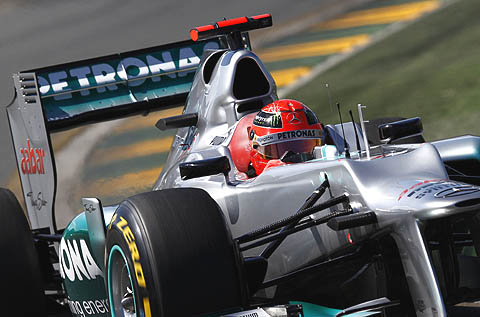 Two races into the 2012 season, and firm conclusions are very hard to come by when assessing the true competitiveness of the teams. The results from the first two races indicate that this could be one of the most open seasons for years, with seven different teams finishing in the top ten in Melbourne - and nine in the mixed conditions of Sepang. Even in qualifying, the margins are incredibly close: the top ten qualifiers from Q2 at the first two races were separated by an average of eight-tenths of a second, compared to 1.5 seconds in the first two races of last year. In such a tightly matched field, small details make a huge difference.


sign in