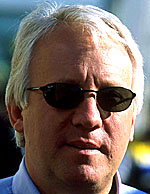
 Though the new engine formula in 2014 will mean a whole raft of changes to the sport, the FIA's Race Director and Safety Delegate, Charlie Whiting, has revealed numerous tweaks to the rules for next season.
As fans remain unconvinced by DRS, many feeling it is a gimmick too far, especially when a circuit features two zones, the second often negating the effect of the first, Whiting has revealed that next season there will be limits on when the device can be used. However, he insists the move is based on grounds of safety.
"It's something we told the teams about the other day and we're going to do that for safety reasons," he told reporters at the Circuit of the Americas, revealing that next year drivers will be restricted to using DRS in the official zone not only in the race but during all practice sessions and qualifying. At present they may use the device at any part of the circuit at any time except during the race.
There is concern that some drivers, particularly during qualifying, are using it in corners, even though it significantly reduces grip, the loss somewhat compensated for on those cars generating the most downforce and thereby giving a much needed performance boost.
"We believe that there have been a number of incidents, and drivers have told me now, that it's becoming increasingly prevalent," said Whiting.
"One could argue that early deployment of DRS is not much different to early deployment of throttle, for example," he continued. "But the DRS is a sort of 'on-off' switch, whereas throttle can be modulated, so it's not quite the same thing. We didn't really want to have it used in qualifying and practice before but we were rather worried that we may not have effective DRS systems. Now I believe, from all the information we have, we should not see any reduction in the effectiveness, the power, of the DRS. Teams will still use it because, even though they're only allowed to use it in perhaps two places on the circuit, I think the benefit will still be there for them.
"The whole point of the DRS was to ensure that we improve overtaking in the race," he added. "That's the sole and stated reason for it. No-one really understood how effective it would be. In fact, most of the engineers told us it would be similar in effect to KERS, so two, three, maybe four-tenths per lap.
"That clearly hasn't been the case. You can see now, depending on the circuit, it can be anywhere between one and one-and-a-half seconds benefit in qualifying. So it's massive in some cases."
The Englishman also revealed that teams will face tougher tests in terms of rigidity next season, a nod to claims that some teams are still pushing the envelope, and then some. From next year, teams will face four independent tests on their front wings.
"Rigidity, or the lack of it, on some front wings has been the subject of a lot of discussion," he said. "We've attempted to introduce some new tests, which not only test its vertical deflection but also the torsional stiffness of the front wing as well. And we're going to take a step further next year.
"It will be a matter of applying the load," he revealed. "At the moment we apply the load at 790mm forward of the front axle. We are going to move that forward 15cm and back 15cm... so we will do two tests."
Asked about recent claims regarding the apparent flexing of the nose on the Red Bull, highlighted in a subsequent video clip, he said: "What you saw on the Red Bull at the last race was extreme, as they had cameras on that part and the guy was actually twisting those cameras to try and get the nose off. I think if other cars had cameras mounted in those places and they did the same thing to get the nose off then they would do something very similar.
"We are satisfied that the Red Bull car is no more flexible than anybody else in that area so it was a rather strange phenomenon," he added, "which I don't think anyone was expecting to see, but there was a perfectly logical explanation for it."
Finally, he revealed that in the wake of the incidents in Spain and Abu Dhabi, when Lewis Hamilton and Sebastian Vettel were excluded from the qualifying results after stopping out on track with insufficient fuel to get them back to the pits, the Technical Working Group (TWG) has been looking into the whole issue of 'force majeure'.
While McLaren's claim of 'force majeure' was not accepted, Red Bull's was, even though it was subsequently discovered that not enough fuel had been put in Vettel's car.
"I think that episode has brought up a number of questions that have been addressed," said Whiting. "We discussed it last week in the TWG and the consensus of opinion is to remove the term 'force majeure' and make it clear what is allowed and is not allowed.



sign in